Reported prices
Solo fuel averages 199.5c/L across Australia, tracked at 31 stations. The lowest Solo price listed is 189.5c/L at Solo Hamilton Hill. compare nearby stations on the fuel map before making a special trip.

Brand prices
Find the cheapest Solo fuel prices across Australia. Current prices range from 189.5c to 219.5c across 31 stations nationwide.
Cheapest now
189.5c
Fill up
8.0c below the market average
across 31 Solo stations

CHEAPER
Solo is below the market average
Solo averages 199.5c/L. 8.0c/L under the Australia market average of 207.5c/L. Nearby stations can still sit below the brand average, so compare local prices before you commit.
The numbers
Solo network average: 199.5 c/L · Australia market average: 207.5 c/L · Brand vs market: -8.0c/L · Cheapest listed now: 189.5 c/LCheapest first
Sorted by listed price. A single station can sit several cents below the brand average, so check the update time before you drive.
Showing 6 of 12 stations.
Compare the current fuel network average with the market, then inspect the reported range, station distribution and recent history. A weekday average is not a fixed cheapest day.
Solo averages 8.0c/L under the market average for fuel. The scale also includes this brand’s lowest and highest reported prices when those values are available.
Price volatility
Median price
Reported range
Lowest weekday average
30 current fuel station prices grouped by the site’s value thresholds.
Distribution covers 30 stations with a current fuel price, from 31 tracked Solo stations.
Brand price snapshot
Solo vs other brands
Average price across each brand's network. Use these as a rough guide. The cheapest station near you can sit below a brand average, especially at the bottom of the cycle.
See how Solo prices and station counts vary by state before opening city or suburb pages.
Swipe across to compare every column.
| Area | Average | Cheapest | Stations |
|---|---|---|---|
| New South Wales | 189.5 c/L | 189.5 c/L | 1 |
| Northern Territory | 208.5 c/L | 208.5 c/L | 2 |
| Queensland | 201.9 c/L | 195.5 c/L | 5 |
| South Australia | 199.8 c/L | 197.5 c/L | 10 |
| Victoria | 199.3 c/L | 195.5 c/L | 10 |
| Western Australia | 192.4 c/L | 191.3 c/L | 3 |
Cheapest cities
Where Solo is cheaper by city. Delta is each city average against this brand's national average, and individual stations can be cheaper again.
Cheapest Solo areas
If you already prefer Solo, these suburbs are where the network has lower listed averages in this data set.
Board prices are before discounts. Pick the cards you actually hold to see what a supermarket docket or member rate knocks off a Solo fill.
Flybuys members may be eligible for about 4c/L off at participating Ampol/Coles Express sites. Eligible Coles shops can also generate a fuel docket, subject to current terms.
Per-litre rates and conditions change. Always check the program for the current offer. Map prices are pump prices before discounts; apply your card or docket at the bowser for the final price.
Solo averages 199.5c/L for Unleaded 91, which is about 8c/L cheaper than the Australia market average of 207.5c/L.
Solo snapshot
Solo fuel averages 199.5c/L across Australia, tracked at 31 stations. The lowest Solo price listed is 189.5c/L at Solo Hamilton Hill. compare nearby stations on the fuel map before making a special trip.
Against the Australia market average of 207.5c/L, Solo runs 8.0c/L cheaper on average. Loyalty dockets and 4c-off vouchers shift what you actually pay, and brand averages move with the cycle, so compare other brands. No single network is consistently cheapest.
A network average can hide a station that is several cents cheaper on the same day. The cheapest listed station is a better place to start. Many markets also swing several cents per litre over a price cycle. Open the fuel map or the cycle tool to time your fill.
If you already prefer Solo, the network has lower listed averages in Book Book (189.5c), Boorooma (189.5c) and Bomen (189.5c). These local pages show the map, station list and how each area compares to the brand average.
Solo prices vary across major cities. Melbourne (197.5c -2.0 vs brand), Brisbane (195.5c -4.0 vs brand) and Perth (192.4c -7.1 vs brand). Drill into any city page for suburb-level breakdowns, station update times and local price ranges.
Solo coverage is strongest in New South Wales with 1 stations averaging 189.5c/L. Open a state to drill into city and suburb-level pricing.
Board prices are before discounts. If you carry supermarket dockets, 4c-off vouchers or a membership, factor them in on the map. A competitive Solo station plus an eligible offer may be lower than the station you would normally choose. See the loyalty calculator below for your cards.
Solo has shown Medium price behaviour over recent data (±5.6c swing) with a typical range of 189.5–219.5c/L. The lowest average day-of-week price was typically on Tuesday (~180.6c/L). Check the price cycle to spot the next trough for this network.
Solo is a reborn Australian fuel brand with roots dating back to 1974, when it helped introduce discount fuel retailing in Australia. Today, Solo Energy Corporation operates a small but growing network of 100% Australian-owned service stations across several states and territories, with sites currently listed in Victoria, South Australia, Western Australia, Queensland and the Northern Territory, plus more locations marked as opening soon. Solo focuses on competitive fuel pricing, everyday value and modern convenience, with locations promoted as offering clean facilities, fast service, convenience-store products, coffee, cold drinks, muffins and hot food options. Fuel types, opening hours and site facilities can vary by location, and Solo does not currently promote a major national loyalty program like Flybuys, Everyday Rewards or BP Rewards. A useful option for Australian motorists looking for independent fuel pricing and a growing alternative to the major fuel chains.
Data updated 10 Aug, 9:01 pm AEST. Source: supported government reporting feeds where available. Based on 31 stations. Brand averages describe the tracked network; an individual station can be cheaper or dearer.
FuelRadar
Loading current fuel data
Reported prices and update times are being prepared for this page.
FuelRadar app
Save a regular station, then set a fuel target for your local area.
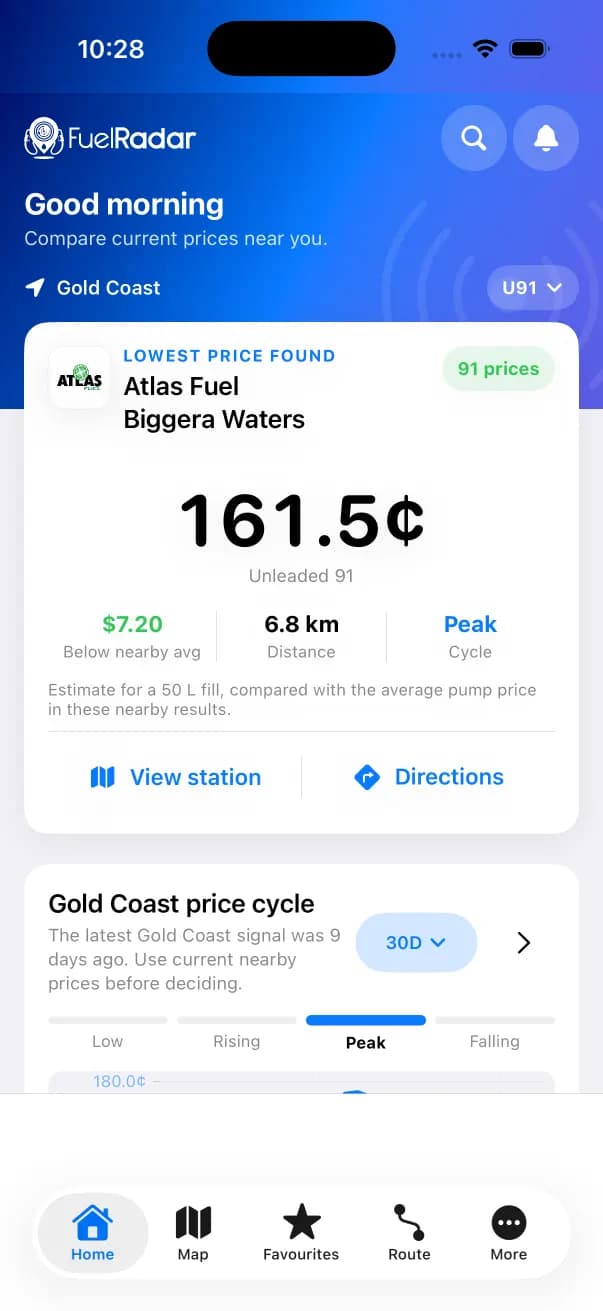
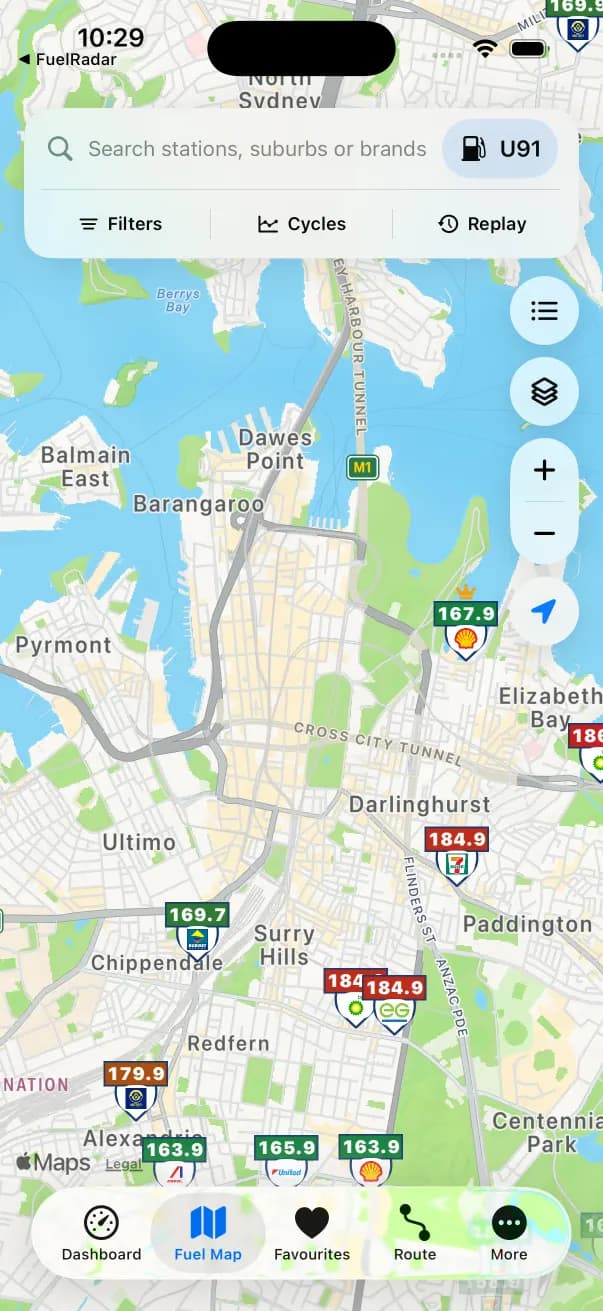
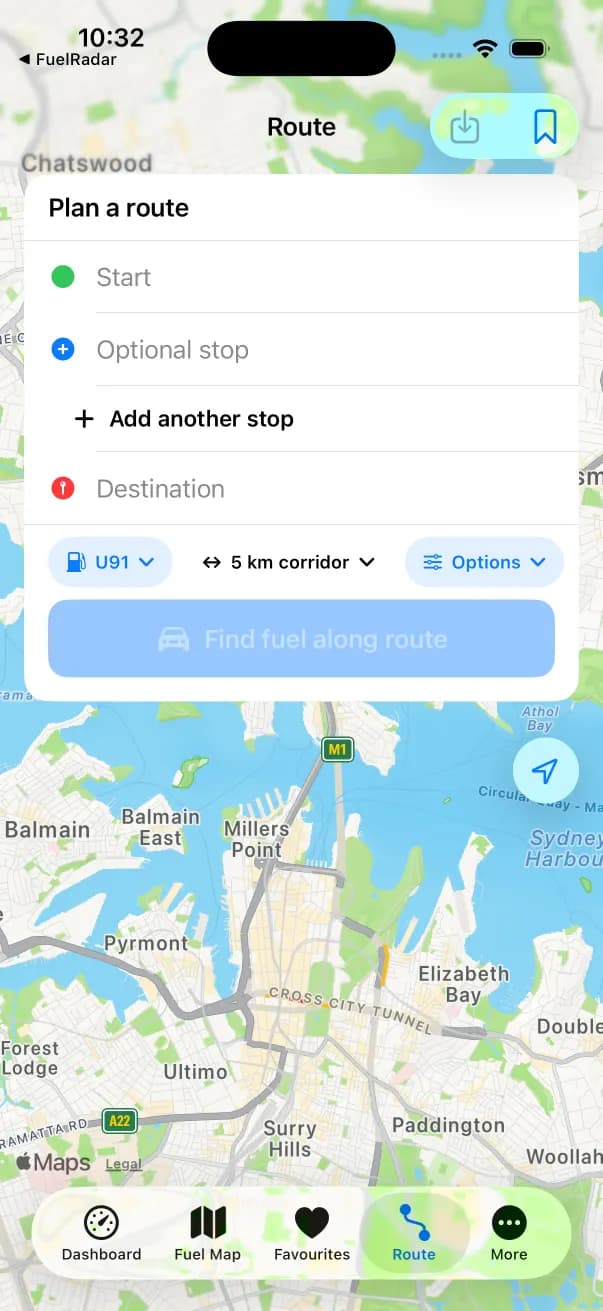
Captured from the current FuelRadar iPhone app. Prices shown are examples from the capture.